Showing posts with label Radio Veronica. Show all posts

Monday, 12 March 2018

33. WHAT TO DO WITH MY LIFE AFTER THE DEMISE OF CAROLINE IN 1968

After my studies in Ghent and with really only RadioVeronica left for musical enjoyment, the reality of life set in. The idea of gap years not having been hatched yet, employment had to be found straight away, if not sooner. For the longest time I had been dreaming of working in English language radio, but with Caroline and even the smaller offshore stations gone there was little chance of that wishful thinking ever coming true. So I went hunting for more mundane jobs. Being a bit stubborn however, I only applied to positions of employment where knowledge of English would be an important factor.

At the Irish Embassy in Brussels they were most surprised to receive my application since -although not specified in their ad- they “were only looking for females”. In the late 60's 'emancipation' apparently did not apply to men. I had more luck when seeking a position at the Zeebrugge office of Townsend Car Ferries, the company which had started a roll-on/roll-off service between Dover and the Belgian port in 1966. Because traffic was increasing steadily the company needed someone who could look after the Belgian side of the accounts and explain things in proper English to the Dover 'overlords'. I started work at Townsend Belgium on December 6th 1968.

Just before joining the working classes I had a “gap-10-days” in Austria. (My only true vacation ever) In Ostend my friend and next door neighbour Walter and myself were joined by a busload of mostly elderly English holiday makers for the trip to Seefeld. And yes in the end we knew all the words to “She'll be coming round the mountain”...

It was whilst swimming at Die Kanne that we first heard Ö3 (Euh drei), the new third programme of Austrian radio, a pop music station that sounded somewhat Caroline-ish (it still does to some extent). As a result we spent quite a bit of time soaking up the hits at the swimming pool.

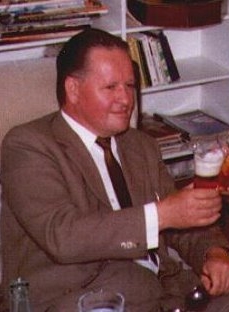
Working for Port Manager Noel A. Johnston MBE (photo above) at Townsend Car Ferries in those early days was an absolute pleasure. The office people busy in the small cottage near the old lock in Zeebrugge formed a tight-knit family, all trying to get the ships loaded and out on time through the very narrow Visart sluice gate. That was especially important since one of the captains was said to consider just two speeds when negociating the lock: “dead slow and stop”.
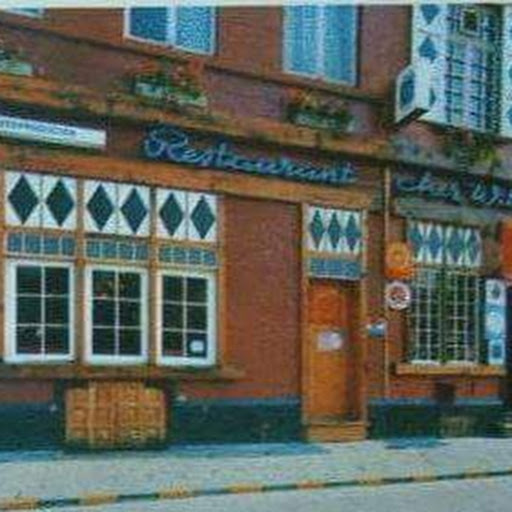
Only weeks after I began my employment the highlight became the first Christmas office party. It was held at the renowned “Chez Willy” restaurant with succulent “râble de lièvre” (saddle of hare) on the festive menu. In fact it was also my first time in a chic restaurant. Little did I know that this classy eating house would some time afterwards become one of my regular stomping grounds entertaining visiting company dignitaries, nor that a year or so later, in early 1971, “Chez Willy” would turn into a favourite dining place for Messrs Meister and Bollier of Radio North Sea International.


Wednesday, 7 March 2018

32. THE CAROLINES HIJACKED AND FEAR OF REVOLUTION

It was a cold and fairly somber Sunday when I got out of bed on March 3rd 1968. As always the first thing I did was switch on the radio. But all remained silent. Caroline was not there! It was only when I got downstairs and tried Caroline North on the big Saba receiver and found that her frequency too remained completely quiet, that a feeling of forboding set in. The next day my fearful apprehension was confirmed by the newspapers. In the early hours of Sunday both the Caroline and the Mi Amigo had been boarded by Dutch seamen in the pay of the suppliers Wijsmuller and towed to the Netherlands because of outstanding debts.

As a matter of principle I did not turn to Radio 1 for my music fix. In the months to come it was Radio Veronica that brought some solace, and sometimes also Radio Kuwait on shortwave. Few people remember this, but for a time Kuwait, with a stable and strong signal, was one of the best pop stations around. Truth be told, I had less time for music in those days, because my exams were drawing near...

In the wider world too it was a troublesome period. It began in May 1968 with a student revolt in Paris which turned into a general strike involving millions of workers and the worst rioting for decades. President Charles de Gaulle resorted to brutal police force to counter this attempt at revolution which immobilised most of France.

Subsequently also students in Belgium, especially in university cities like Ghent and Louvain, took to the streets. Suddenly that brought two plain clothes members of the secret police to my house. I was upstairs studying and unaware of the fact that these men threatened my mother not to let me join the protests, or “worse would follow”. The then Belgian prime minister Gaston Eyskens had just formed a coalition government with the help of the Christian Democrats (CVP) and the Socialists (BSP), two parties that had lost seats during the elections in March '68. Eyskens feared that if the protests continued they would bring down the government and revolution would ensue... With hindsight, it wàs the year that the Beatles brought out their hit “Revolution”, not that the Belgian prime minister would have been aware of that.

In the Netherlands all remained calm during the disruptive May days of 1968. It has been said that this was partly due to the existence of Radio Veronica. The station went some way in making the country a happier place and functioned as a valve to diffuse any pent up tension among students and workers alike.   

Wednesday, 14 February 2018

19. THE REM ISLAND SUMMER

In late Spring 1964 the papers in the Netherlands and Flanders were awash with news about an offshore TV-project that was being prepared by a Rotterdam-based ship builder. Cornelis Verolme had set up a company called ‘Reclame Exploitatie Maatschappij’, which he floated on the stock market. As a result of the massive media-hype surrounding the project, in just a few hours the REM share-issue was heavily over-subscribed. Thousands of ordinary Dutch men and women proved eager to invest 20 guilders per share in the company. Within 10 days, the value had leaped to 143 guilders

In the meantime the artificial REM-island, built in the Irish port of Cork, was lashed on to the massive lifting vessel ‘Global Adventurer’, and transported to a position off the Dutch coast. Soon afterwards work started in earnest on ‘The Thing’ -as the Irish workmen called it- in international waters some 6 miles off the seaside resort of Noordwijk. Fifty two meter long steel piles were inserted into each of the six leg segments and subsequently hammered into the seabed. Working day and night Dutch, Irish, Belgian and Spanish workmen assembled the offshore construction in just eight days.  

Subsequently Radio Noordzee was heard testing on a number of frequencies. On Wednesday July 29th 1964 –the middle of my Summer hols- the station settled on 214m Medium Wave. At the time I was again spending a few weeks at the house of my mother’s eldest sister in Beerzel. Whilst there I often went on long bicycle jaunts with Ronald Hazelrigg, an American friend of mine. Ronny -as we called him then- was at his grandparents for the Summer. The boy -he was a year younger than me- was mad about bicycles; at the time a most uncommon mode of transport in the States I understand. As there was hardly anyone else in the village who could speak English, Ronny and I, having met watching the dodgem cars at the Summer fair, spent a lot of time together. 

If I was baffled over Ronny’s dreams of becoming a professional cyclist, he was even more bewildered by the fact that I made such a song and dance over some radio station going on the air. In Wheelersburg Ohio, where he then lived, one could tune in to any number of commercial stations, many of them from nearby Portsmouth. It took some time to explain that things were totally different in most of Europe. Hence -on Noordzee’s on air day- it was at near breakneck speed that we cycled back to catch the first proper wireless transmissions from the REM-island on his grandmother’s set. Reception was excellent but the music was somewhat disappointing. The station was no match for either Caroline or Veronica. 

More of AJ's radio- and other anecdotes.

Sunday, 11 February 2018

13. PIRATES OFF THE BRITISH MAIN

In 1964, like modern day successors to the 16th century French, Dutch and English privateers off the Spanish Main, suddenly a flurry of radio pirates popped up along the British Main, being the Essex coast and the Thames Estuary; often described as pirate alley. Un­like their Caribbean predecessors, who went after Spain’s sil­ver bullion, the pop pirates had set their sights on London’s adver­tising dollar in an attempt to break the monopoly of the BBC and the large record com­­panies. The pioneer in the race to lay claim to the lucrative London market was Radio Caroline, financed by Irishman Ronan O’Rahilly, who hoped to emulate Veronica’s success. A former Danish passenger ferry Frederica was bought, renamed Caroline and fitted out as a radio ship in the Irish port of Greenore, owned by Ronan’s family. After two days of tests off Felixstowe Britain’s first off­shore station opened officially on Easter Sunday, March 29th 1964. Ronan had been egging on everyone connected with the organisation in order to be able to inaugurate the station on that day. 

In fact, at the time, I only heard about Caroline going on the air on Easter Monday, as I was spending my school holidays in the small Belgian village of Beerzel (near Malines) where my maternal grandparents lived. My immediate problem was that Caroline’s broadcast on the announced 199m (in fact 1520 kHz) was too close to Belgian regional radio in Antwerp. But as luck would have it my niece Maria Goris, who had just married, was in possession of a large Phillips portable radio, which could be turned away from most of the splutter involuntarily caused by the Antwerp station on the adjacent channel. After a few minutes’ tuning and turning the sound of Caroline’s bell rang through the small house. It would change my life forever. Over the years the start of Caroline has also become a very important date to me personally. More than half a century later I still use it as an all important benchmark. In my life BC means ‘Before Caroline’.

More of AJ's radio- and other anecdotes.

Thursday, 8 February 2018

04. PORTABLE RADIO BLUES

It was in the late 1950’s that I became a regular listener to Radio Luxemburg, the English service in the evening on 208m Medium Wave. I vividly remember sitting at the dining table with my father enjoying ‘Wooden Heart’ by Elvis on Luxy. It must have been 1960, as at the time the song was in the hit parade for weeks on end. Tuning in to Radio Luxembourg was like a breath of fresh air, maybe even akin to being fed a few liberal doses of pure oxygen. Until early in 1960 Luxemburg was the only radio station in the whole of Europe that played the latest records non-stop. It was the same year I started to learn English at school. I was 13 then.

My teacher in Heist, Xaverian Brother Ildefons Rotsaert, spoke proper King’s English, but devoted much of his tutoring time perfecting his hate of Communism. Although I was very determined to do well, after the first week I proved to be the worst pupil at English in the whole class. Apparently I had even failed to grasp the correct spelling of the ‘definite article’. The shame was too much to bear! This wasn’t supposed to happen. My father’s family had spent the entire war in England and many family members felt more British than the Brits. No wonder I kept quiet about what I considered to be ‘an absolute disaster’. Before my parents ever found out I had turned things around. So much so, that just days later I was ‘best of class’ for English, and remained so. However that was not the case for many of the other subjects. But I considered that to be of lesser importance…

A few months earlier, by continuously pestering my parents, and purposely doing rather well at school, I was allowed to choose my very own transistor radio. Well, that is not exactly true. My parents bought me a portable radio. It was the cheapest model available, but still a heavy strain on my mother’s purse. For a while I was ecstatic with my -medium wave only- red and cream coloured ‘Tesla Minor’. It was built in Czechoslovakia but still had vacuum tubes instead of transistors. As a result my infatuation with radio soon turned into too high maintenance a love affair. My Tesla Minor became a major disappointment as it only performed after ingesting a bulky and expensive battery, which in addition was very short lived. Especially since I spent long hours listening to Radio Veronica, the offshore station which had just started broadcasting off the Dutch coast in April 1960. That was a full four years before Caroline’s bell tolled. I remember walking to my grandmother’s during the Summer of 1960, with my Tesla tuned to 192m, listening to Veronica. I might just as well not have bothered to bring the portable. On a warm day in Heist one could hear Veronica’s hits and ‘Nur Die’ commercials just about everywhere as they poured into the streets from every open door and window. That Summer it seemed all land based stations were out of favour.  No prizes for guessing why.


The luxury of having a portable tube radio however utterly drained my finances. Hence, the Tesla set was soon demoted. It was put in the corner of our veranda and the small loudspeaker was hooked up to the main radio. That way we could also listen whilst enjoying the Summer sunshine. The main thing was that it didn’t cost me anything anymore, which meant that I could save up for a proper transistor radio.

More of AJ's radio- and other anecdotes.