Showing posts with label Ghent. Show all posts

Monday, 12 March 2018

33. WHAT TO DO WITH MY LIFE AFTER THE DEMISE OF CAROLINE IN 1968

After my studies in Ghent and with really only RadioVeronica left for musical enjoyment, the reality of life set in. The idea of gap years not having been hatched yet, employment had to be found straight away, if not sooner. For the longest time I had been dreaming of working in English language radio, but with Caroline and even the smaller offshore stations gone there was little chance of that wishful thinking ever coming true. So I went hunting for more mundane jobs. Being a bit stubborn however, I only applied to positions of employment where knowledge of English would be an important factor.

At the Irish Embassy in Brussels they were most surprised to receive my application since -although not specified in their ad- they “were only looking for females”. In the late 60's 'emancipation' apparently did not apply to men. I had more luck when seeking a position at the Zeebrugge office of Townsend Car Ferries, the company which had started a roll-on/roll-off service between Dover and the Belgian port in 1966. Because traffic was increasing steadily the company needed someone who could look after the Belgian side of the accounts and explain things in proper English to the Dover 'overlords'. I started work at Townsend Belgium on December 6th 1968.

Just before joining the working classes I had a “gap-10-days” in Austria. (My only true vacation ever) In Ostend my friend and next door neighbour Walter and myself were joined by a busload of mostly elderly English holiday makers for the trip to Seefeld. And yes in the end we knew all the words to “She'll be coming round the mountain”...

It was whilst swimming at Die Kanne that we first heard Ö3 (Euh drei), the new third programme of Austrian radio, a pop music station that sounded somewhat Caroline-ish (it still does to some extent). As a result we spent quite a bit of time soaking up the hits at the swimming pool.

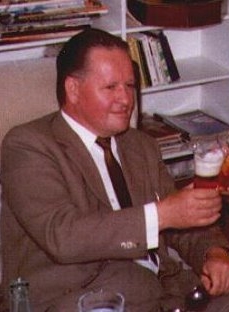
Working for Port Manager Noel A. Johnston MBE (photo above) at Townsend Car Ferries in those early days was an absolute pleasure. The office people busy in the small cottage near the old lock in Zeebrugge formed a tight-knit family, all trying to get the ships loaded and out on time through the very narrow Visart sluice gate. That was especially important since one of the captains was said to consider just two speeds when negociating the lock: “dead slow and stop”.
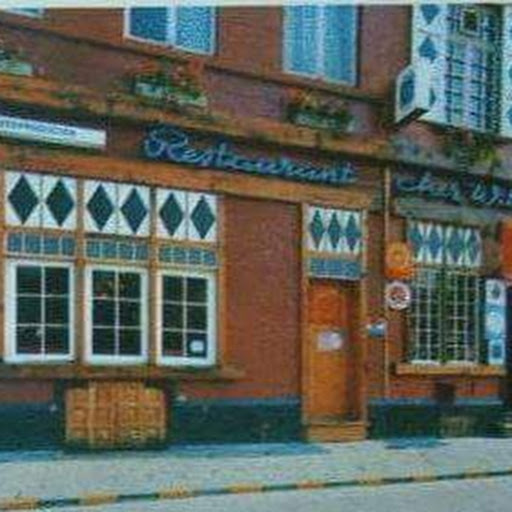
Only weeks after I began my employment the highlight became the first Christmas office party. It was held at the renowned “Chez Willy” restaurant with succulent “râble de lièvre” (saddle of hare) on the festive menu. In fact it was also my first time in a chic restaurant. Little did I know that this classy eating house would some time afterwards become one of my regular stomping grounds entertaining visiting company dignitaries, nor that a year or so later, in early 1971, “Chez Willy” would turn into a favourite dining place for Messrs Meister and Bollier of Radio North Sea International.


Wednesday, 7 March 2018

32. THE CAROLINES HIJACKED AND FEAR OF REVOLUTION

It was a cold and fairly somber Sunday when I got out of bed on March 3rd 1968. As always the first thing I did was switch on the radio. But all remained silent. Caroline was not there! It was only when I got downstairs and tried Caroline North on the big Saba receiver and found that her frequency too remained completely quiet, that a feeling of forboding set in. The next day my fearful apprehension was confirmed by the newspapers. In the early hours of Sunday both the Caroline and the Mi Amigo had been boarded by Dutch seamen in the pay of the suppliers Wijsmuller and towed to the Netherlands because of outstanding debts.

As a matter of principle I did not turn to Radio 1 for my music fix. In the months to come it was Radio Veronica that brought some solace, and sometimes also Radio Kuwait on shortwave. Few people remember this, but for a time Kuwait, with a stable and strong signal, was one of the best pop stations around. Truth be told, I had less time for music in those days, because my exams were drawing near...

In the wider world too it was a troublesome period. It began in May 1968 with a student revolt in Paris which turned into a general strike involving millions of workers and the worst rioting for decades. President Charles de Gaulle resorted to brutal police force to counter this attempt at revolution which immobilised most of France.

Subsequently also students in Belgium, especially in university cities like Ghent and Louvain, took to the streets. Suddenly that brought two plain clothes members of the secret police to my house. I was upstairs studying and unaware of the fact that these men threatened my mother not to let me join the protests, or “worse would follow”. The then Belgian prime minister Gaston Eyskens had just formed a coalition government with the help of the Christian Democrats (CVP) and the Socialists (BSP), two parties that had lost seats during the elections in March '68. Eyskens feared that if the protests continued they would bring down the government and revolution would ensue... With hindsight, it wàs the year that the Beatles brought out their hit “Revolution”, not that the Belgian prime minister would have been aware of that.

In the Netherlands all remained calm during the disruptive May days of 1968. It has been said that this was partly due to the existence of Radio Veronica. The station went some way in making the country a happier place and functioned as a valve to diffuse any pent up tension among students and workers alike.   

Wednesday, 21 February 2018

27. CHOOSING BETWEEN STUDYING AND 60's CAROLINE

In 1965 and 1966 it really kicked off along the British coast. Although because of my studies in Ghent I had somewhat less time to monitor the goings on at stations like KING, 390 and Radio Essex, the start of Radio Scotland from the Comet and the moment when Swinging RadioEngland and Britain Radio rocked up on board the Laissez Faire did not go unnoticed.
In Ghent, after lunch in 'De Brug', a handful of us would hang out at the Blandijnberg talking about the music of the day and about offshore radio. Often, when we had an hour to spare, we went to the closeby 'kot' of Jos Borré to listen to Radio Caroline. During lessons we even 'pestered' one of the assistant professors, McCauley, with tales about the pirates. So much so that, for our benefit, the young Scotsman later included a question about the offshore stations in the written English exam.
In the day Germanic philology still consisted of the study of three main languages: Dutch, English ànd German. For me listening to the offshore stations had been a great help to get a good grasp of colloquial English. That came to the fore when one day, during a talk about the poet Keats, professor Willem Schrickx (1918-1998) told a joke in English and in a packed auditorium I was the only one who laughed. Which made an unhappy professor comment in his native Antwerp dialect “d'er is er ier mor ene deen Engels kent”.
At university my German didn't quite match my knowledge of English. But it wasn't too bad either since for a number of years I had been obsessed with Franz Kafka. In fact I had read every single word this Jewish author from Prague, who wrote in German, had ever committed to paper. 
By sheer coincidence my professor German, Herman Uyttersprot (1909-1967), had written extensively about Kafka. Uyttersprot was good fun in spite of the fact that he stood before us making jokes whilst dying of throat cancer. One of his last bits of fun was teaching us a new German word to describe the French scantily clad film star Brigitte Bardot. He called her “eine Nacktrice”. My time in Ghent was not always plain sailing, especially the Logics course proved somewhat of a nightmare. But in spite of a very heavy workload every night I tried to hear at least one hour of the Johnnie Walker Show on Caroline.