Showing posts with label Radio Caroline. Show all posts

Monday, 12 March 2018

33. WHAT TO DO WITH MY LIFE AFTER THE DEMISE OF CAROLINE IN 1968

After my studies in Ghent and with really only RadioVeronica left for musical enjoyment, the reality of life set in. The idea of gap years not having been hatched yet, employment had to be found straight away, if not sooner. For the longest time I had been dreaming of working in English language radio, but with Caroline and even the smaller offshore stations gone there was little chance of that wishful thinking ever coming true. So I went hunting for more mundane jobs. Being a bit stubborn however, I only applied to positions of employment where knowledge of English would be an important factor.

At the Irish Embassy in Brussels they were most surprised to receive my application since -although not specified in their ad- they “were only looking for females”. In the late 60's 'emancipation' apparently did not apply to men. I had more luck when seeking a position at the Zeebrugge office of Townsend Car Ferries, the company which had started a roll-on/roll-off service between Dover and the Belgian port in 1966. Because traffic was increasing steadily the company needed someone who could look after the Belgian side of the accounts and explain things in proper English to the Dover 'overlords'. I started work at Townsend Belgium on December 6th 1968.

Just before joining the working classes I had a “gap-10-days” in Austria. (My only true vacation ever) In Ostend my friend and next door neighbour Walter and myself were joined by a busload of mostly elderly English holiday makers for the trip to Seefeld. And yes in the end we knew all the words to “She'll be coming round the mountain”...

It was whilst swimming at Die Kanne that we first heard Ö3 (Euh drei), the new third programme of Austrian radio, a pop music station that sounded somewhat Caroline-ish (it still does to some extent). As a result we spent quite a bit of time soaking up the hits at the swimming pool.

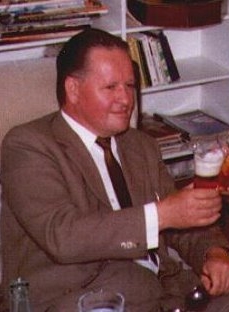
Working for Port Manager Noel A. Johnston MBE (photo above) at Townsend Car Ferries in those early days was an absolute pleasure. The office people busy in the small cottage near the old lock in Zeebrugge formed a tight-knit family, all trying to get the ships loaded and out on time through the very narrow Visart sluice gate. That was especially important since one of the captains was said to consider just two speeds when negociating the lock: “dead slow and stop”.
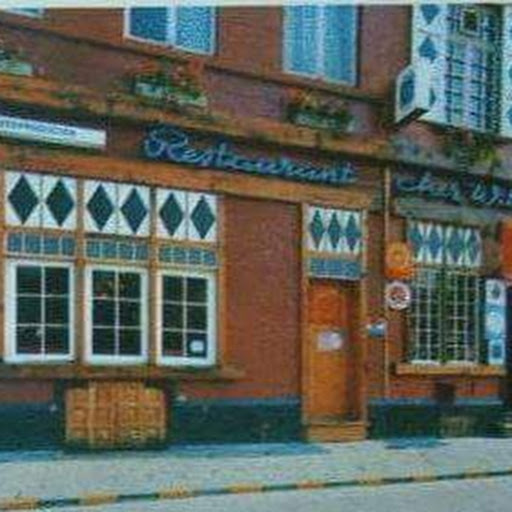
Only weeks after I began my employment the highlight became the first Christmas office party. It was held at the renowned “Chez Willy” restaurant with succulent “râble de lièvre” (saddle of hare) on the festive menu. In fact it was also my first time in a chic restaurant. Little did I know that this classy eating house would some time afterwards become one of my regular stomping grounds entertaining visiting company dignitaries, nor that a year or so later, in early 1971, “Chez Willy” would turn into a favourite dining place for Messrs Meister and Bollier of Radio North Sea International.


Wednesday, 7 March 2018

32. THE CAROLINES HIJACKED AND FEAR OF REVOLUTION

It was a cold and fairly somber Sunday when I got out of bed on March 3rd 1968. As always the first thing I did was switch on the radio. But all remained silent. Caroline was not there! It was only when I got downstairs and tried Caroline North on the big Saba receiver and found that her frequency too remained completely quiet, that a feeling of forboding set in. The next day my fearful apprehension was confirmed by the newspapers. In the early hours of Sunday both the Caroline and the Mi Amigo had been boarded by Dutch seamen in the pay of the suppliers Wijsmuller and towed to the Netherlands because of outstanding debts.

As a matter of principle I did not turn to Radio 1 for my music fix. In the months to come it was Radio Veronica that brought some solace, and sometimes also Radio Kuwait on shortwave. Few people remember this, but for a time Kuwait, with a stable and strong signal, was one of the best pop stations around. Truth be told, I had less time for music in those days, because my exams were drawing near...

In the wider world too it was a troublesome period. It began in May 1968 with a student revolt in Paris which turned into a general strike involving millions of workers and the worst rioting for decades. President Charles de Gaulle resorted to brutal police force to counter this attempt at revolution which immobilised most of France.

Subsequently also students in Belgium, especially in university cities like Ghent and Louvain, took to the streets. Suddenly that brought two plain clothes members of the secret police to my house. I was upstairs studying and unaware of the fact that these men threatened my mother not to let me join the protests, or “worse would follow”. The then Belgian prime minister Gaston Eyskens had just formed a coalition government with the help of the Christian Democrats (CVP) and the Socialists (BSP), two parties that had lost seats during the elections in March '68. Eyskens feared that if the protests continued they would bring down the government and revolution would ensue... With hindsight, it wàs the year that the Beatles brought out their hit “Revolution”, not that the Belgian prime minister would have been aware of that.

In the Netherlands all remained calm during the disruptive May days of 1968. It has been said that this was partly due to the existence of Radio Veronica. The station went some way in making the country a happier place and functioned as a valve to diffuse any pent up tension among students and workers alike.   

Friday, 2 March 2018

31. FOR NO MAN WILL EVER FORGET...

Being a 60's offshore anorak, like so many others, it was with dread that I followed the ominous countdown to August 14th 1967 when the Marine Broadcasting Offences Act would take effect at midnight. Even before the ultimate day stations were closing down for all sorts of reasons. On July 23rd came the end for Radio 227, one of the twin stations on the Laissez Faire. Next was fort based Radio 390. The “Woman's Magazine of the Air” ended its transmissions on July 28. On August 6th it was Radio 355's turn, the second of the twin stations.

According to my diary in spite of a southerly wind there was nothing summery about August 14th 1967. The temperature barely reached 14 degrees C. And all day the sun refused to put in an appearance. In fact it was very very cloudy, perfectly reflecting my somber mood. Like one waiting on death row I listened to Radio London, as the minutes ticked by in the life of the station. And then "their Final Hour" was upon us. At 16,00 hrs (3 pm in the UK) Paul Kaye's became the last voice to be heard on Big L. It had also been the first voice on the station.

After the close down, like so many thousands, I retuned to 259, to hear Caroline welcome the Radio London listeners. But then it was time for me to make tracks, as duty called. I had a Summer job to get to at the Games Arcade in Blankenberge.

Later that evening also Radio 270 and Tommy Shields' Radio Scotland closed down. In spite of interference from the electric games in the Arcade I did manage to hear Caroline turn into Radio Caroline International as the pioneer station defied the Marine Broadcasting Offences Act at midnight (1 in the morning my time). To this day hearing Johnnie Walker's “Man's Fight For Freedom” still makes my eyes go moist. (Lyrics)


Tuesday, 27 February 2018

30. FRESH PAINT AND AN ABUNDANCE OF CAROLINES

Very much like Marcel Proust's 'madeleine moment' it was the smell of fresh paint at a friend's house that today brought another personal highlight from the offshore days back to mind... I remembered that there was a time when three Radio Carolines were on the air. At that crucial occasion it so happens that I had to spend a few nights in the spare room. My own bedroom was being repainted, by my dad and myself. In fact the smell of paint permeated much of the house.

Months before the threat of anti-pirate legislation doomed, it was mostly the power of water and winds the wireless buccaneers off Britain's coast had to contend with... So during a massive storm late on January 19th 1966 the MV Mi Amigo, home of Radio Caroline South started drifting and subsequently ran aground on the snow-covered beach at Holland Haven (Frinton-on-Sea). At the crack of dawn radios remained silent as transmissions had ceased when the ship entered British waters. After failed attempts by the tugboat Titan, the Mi Amigo refloated herself at high tide by winding on the repositioned anchor. Upon inspection it proved that the hull was damaged and the vessel was towed to Zaandam in the Netherlands for repairs in dry dock.

In those days -not to be unfaithful- I did my best to regularly tune in to Radio Caroline North off the Isle of Man. But then suddenly Caroline South was back, but from a different ship. Mrs Britt Wadner (1915-1987), the blonde 'Queen of pirate radio', had offered Ronan the use of her Swedish Radio Syd* ship 'Cheetah 2”. The vessel having been driven from its usual anchorage in the Baltic by pack ice.

Much technical wizardry and many dead-airs later the programmes of Caroline South resumed on 199 m from the Cheetah on February 13th 1966, be it at fairly low power. Then on April 5th the Mi Amigo appeared alongside the Swedish vessel after repairs and a refit had been finalized. It was time for the fun to kick off.

The idea was that the Cheetah would relay the programmes on 199 m from the Mi Amigo which was now broadcasting on an announced 259m (253 in fact) with 50 kWatts of power. That did happen, but for a time also separate programmes were aired, resulting in two Caroline Souths, and off course, in the Irish sea, there still was Caroline North. What is more, a lot of on air banter was at times going on between both South ships. Evenings for me in the spare room, my paint-free refuge, were full of laughter during the link-ups between the vessels. I remember listening to Dave Lee Travis and Graham Webb on the Cheetah and Tony Blackburn with Norman St.John on the Mi Amigo. The fun wasn't to last though. On May 1st Britt sailed her radioship to Spain and later on to The Gambia, where she obtained a broadcasting license. And in our neck of the woods Caroline South sounded as loud as Big L. It's an ill wind...

* Syd means South and is pronounced more or less like Sud in French.

More of AJ's radio- and other anecdotes.

Sunday, 25 February 2018

29. A RADIO IN EACH EAR

Musicwise 1967 stands out in my mind as the year the Beatles' iconic album “Sgt. Pepper's Lonely Hearts Club Band” was released. There was a rush among the students at university, myself included, to get a tape copy of the album to coax us more or less gently through study time leading up to the exams... Luckily by that time I was the proud owner of a sturdy Grundig tape recorder.

During the Summer of 1967, -the so called Summer of 'Love'- when the US was rocked by race riots, also the end was in sight for most of the British offshore stations. I took a job to help pay for my studies, working for two months at the Sportland Lunapark on the seafront in Blankenberge. At the time many British holiday makers flocked to the popular Belgian seaside resort and were regulars at the games hall. Among them one of the sons of Spike Milligan. I also made the acquaintance of quite a few Southwalians like Nigel Jones from Barry Island and Michael Hibbs (photo) who lived at Treherbert in the Rhondda. For any Flemish readers of this blog I can further add that also the famous revue artist Charles Janssens (1906-1986) religiously played a few games at Sportland after finishing his performance at Blankenberge's well known Wit Paard.

At the games arcade I had opted for the late shift which meant I was working from 5 in the afternoon until about 3 at night. As a result I had most of the day to go to the beach and tune in to the 'pirates'. Cycling home at night I used to carry two small transistor radios in my pocket, listening to Caroline in one ear and to Big L in the other.

Saturday, 24 February 2018

28. THE WRITING IS ON THE WALL FOR THE PIRATES

Already in late 1966 the writing was on the wall for the radio stations off Britain's coast. The government of Harold Wilson, egged on by Post Master General Tony Ben, was determined to bring in legislation to make it illegal for British citizens or companies to supply the pirates, work for them or advertise on the stations.

On January 1st 1967 there was a bit of good news for a change. As announced earlier by Caroline on New Year's Eve, Radio 390 returned to the airwaves. I remember, the next day, writing a letter to Prince Charles protesting against the British government's actions to sink the pirates.. “Why not”, I thought “the crown prince is a paid-up member of the Big L club and has a Radio London T-shirt...” After a few months I got a reply from the Home Office with the usual lies.

The imminent demise of the offshore stations was not the only problem at the time. I also had to try and commit professor Hesman's German “Kulturgeschichte” to memory. I found that this was best done with the deep brown voice of Jim Reeves in the background. Luckily both Radio 390 and Radio 355 (former Britain Radio) now had a Jim Reeves Show on Sundays. The reason being that after a boardroom battle station manager Ted Allbeury left 390 and went on to run Radio 355, taking most of his middle-of-the-road programming ideas with him and some of the dj's. Theodore Edward le Bouthillier (Ted) Allbeury (1917-2005) had been a real-life spy during the Second World War, decades before he got involved with radio and then started writing best-selling novels.

Not only Britain Radio had changed name... As it proved unsuccessful Swinging Radio England went Dutch and turned into easy going Radio Dolfijn and still later into Radio 227. It was hard to keep up with the changes. Later more upset as one by one the fort based stations fell by the wayside and my exams doomed...

Wednesday, 21 February 2018

27. CHOOSING BETWEEN STUDYING AND 60's CAROLINE

In 1965 and 1966 it really kicked off along the British coast. Although because of my studies in Ghent I had somewhat less time to monitor the goings on at stations like KING, 390 and Radio Essex, the start of Radio Scotland from the Comet and the moment when Swinging RadioEngland and Britain Radio rocked up on board the Laissez Faire did not go unnoticed.
In Ghent, after lunch in 'De Brug', a handful of us would hang out at the Blandijnberg talking about the music of the day and about offshore radio. Often, when we had an hour to spare, we went to the closeby 'kot' of Jos Borré to listen to Radio Caroline. During lessons we even 'pestered' one of the assistant professors, McCauley, with tales about the pirates. So much so that, for our benefit, the young Scotsman later included a question about the offshore stations in the written English exam.
In the day Germanic philology still consisted of the study of three main languages: Dutch, English ànd German. For me listening to the offshore stations had been a great help to get a good grasp of colloquial English. That came to the fore when one day, during a talk about the poet Keats, professor Willem Schrickx (1918-1998) told a joke in English and in a packed auditorium I was the only one who laughed. Which made an unhappy professor comment in his native Antwerp dialect “d'er is er ier mor ene deen Engels kent”.
At university my German didn't quite match my knowledge of English. But it wasn't too bad either since for a number of years I had been obsessed with Franz Kafka. In fact I had read every single word this Jewish author from Prague, who wrote in German, had ever committed to paper. 
By sheer coincidence my professor German, Herman Uyttersprot (1909-1967), had written extensively about Kafka. Uyttersprot was good fun in spite of the fact that he stood before us making jokes whilst dying of throat cancer. One of his last bits of fun was teaching us a new German word to describe the French scantily clad film star Brigitte Bardot. He called her “eine Nacktrice”. My time in Ghent was not always plain sailing, especially the Logics course proved somewhat of a nightmare. But in spite of a very heavy workload every night I tried to hear at least one hour of the Johnnie Walker Show on Caroline.


Wednesday, 14 February 2018

19. THE REM ISLAND SUMMER

In late Spring 1964 the papers in the Netherlands and Flanders were awash with news about an offshore TV-project that was being prepared by a Rotterdam-based ship builder. Cornelis Verolme had set up a company called ‘Reclame Exploitatie Maatschappij’, which he floated on the stock market. As a result of the massive media-hype surrounding the project, in just a few hours the REM share-issue was heavily over-subscribed. Thousands of ordinary Dutch men and women proved eager to invest 20 guilders per share in the company. Within 10 days, the value had leaped to 143 guilders

In the meantime the artificial REM-island, built in the Irish port of Cork, was lashed on to the massive lifting vessel ‘Global Adventurer’, and transported to a position off the Dutch coast. Soon afterwards work started in earnest on ‘The Thing’ -as the Irish workmen called it- in international waters some 6 miles off the seaside resort of Noordwijk. Fifty two meter long steel piles were inserted into each of the six leg segments and subsequently hammered into the seabed. Working day and night Dutch, Irish, Belgian and Spanish workmen assembled the offshore construction in just eight days.  

Subsequently Radio Noordzee was heard testing on a number of frequencies. On Wednesday July 29th 1964 –the middle of my Summer hols- the station settled on 214m Medium Wave. At the time I was again spending a few weeks at the house of my mother’s eldest sister in Beerzel. Whilst there I often went on long bicycle jaunts with Ronald Hazelrigg, an American friend of mine. Ronny -as we called him then- was at his grandparents for the Summer. The boy -he was a year younger than me- was mad about bicycles; at the time a most uncommon mode of transport in the States I understand. As there was hardly anyone else in the village who could speak English, Ronny and I, having met watching the dodgem cars at the Summer fair, spent a lot of time together. 

If I was baffled over Ronny’s dreams of becoming a professional cyclist, he was even more bewildered by the fact that I made such a song and dance over some radio station going on the air. In Wheelersburg Ohio, where he then lived, one could tune in to any number of commercial stations, many of them from nearby Portsmouth. It took some time to explain that things were totally different in most of Europe. Hence -on Noordzee’s on air day- it was at near breakneck speed that we cycled back to catch the first proper wireless transmissions from the REM-island on his grandmother’s set. Reception was excellent but the music was somewhat disappointing. The station was no match for either Caroline or Veronica. 

More of AJ's radio- and other anecdotes.

Tuesday, 13 February 2018

18. PIONEER STATIONS MERGE

When Radio Atlanta took to the airwaves in the second week of May 1964, Caroline, the first of Britain’s pop privateers, was already claiming seven million listeners. Anchored just fourteen miles from each other, both stations were aiming at the same audience. Talks ensued between Project Atlanta and Ronan’s Planet Productions and on July 2nd the merger between the two stations was announced. At 8 pm on the same day Radio Atlanta closed down for the very last time. In their joint statement Ronan O’Rahilly and Alan Crawford said: "The decision to merge was taken due to the enormous interest from the public and advertisers in parts of England outside our original transmission area. The merger means that we will now cover the most populated areas of Great-Britain and will meet the demands of advertisers in the Midlands & North and from existing advertisers who are already taking time on the two stations”.

The next day the original Caroline ship set sail westward towards The Channel, hugging the coast and broadcasting as she went. On board the dj’s tried to predict at what time the ship would be passing important coastal towns. I remember Tom Lodge announcing “This is Radio Caroline steaming West along the South coast”. I managed to pick up the transmission until the ship passed Penzance, just before Land’s End. It took some four days for Caroline to reach her new anchorage off the Isle of Man in Ramsey Bay. Radio Caroline North continued broadcasting on 197m and Radio Caroline South on 201m, both advertising their spot on the dial as ‘one nine nine’, because it rhymed so well with Caroline. With digital frequency read-outs still far in the future hardly anyone noticed -or cared about- this white lie for euphony’s sake. In Zeebrugge, where I lived, I could receive both Carolines. Caroline South obviously offering by far the strongest signal on the Belgian coast. 

More of AJ's radio- and other anecdotes.

Monday, 12 February 2018

16. LORD OF THE AIRWAVES

Even in Belgium hardly a day went by or newspapers were reporting on the rapidly expanding British offshore scene. On my 17th birthday the Flemish newspaper ‘Het Volk’ announced that Screaming Lord Sutch was all set to start broadcasting from the fishing trawler Cornucopia in the Thames Estuary. The next day, Saturday May 27th 1964, I managed to pick up Radio Sutch, which was calling itself ‘Britain’s first teenage radio station’. The new pirate was only on the air for a couple of hours in a row. Also, the station started very late in the morning. Not knowing any better at the time I thought that the dj’s were plain lazy and overslept or maybe had wild all night parties and were subsequently suffering from a collective hangover. This proved not to be the reason for the late start however. Later I learnt that the transmitter was battery operated, hence the rather flexible broadcasting times. 

The signal, on an announced 197m (next to Caroline), was fairly weak. Especially in early evening the green tuning eye on the Saba radio at home started winking erratically as interference from other stations moved in. It also soon proved that the crew of motley minions around David Sutch were in fact broadcasting from one of the derelict towers of Shivering Sands Fort off Whitstable in Kent. As a result it was the first offshore buccaneer to take up residence on one of the wartime anti-aircraft sea forts off the British coast. They had been designed by Irish-born Robert Maunsell and the last one was abandoned by the Navy in 1958. 

In the early 60’s Screaming Lord Sutch was known for his horror-themed stage show, dressing as Jack the Ripper. From the start Sutch was of course plugging his own records on the station. In fact I remember being quite taken by ‘Dracula’s Daughter’ and ‘The Monster Man’.  When I listen to the songs now, I can only conclude that there must have been something wrong with me at the time. There probably still is.

In the 60’s David (Screaming Lord) Sutch also started to dabble in politics of sorts. In the General Election on October 15th 1964 he stood in Prime Minister Harold Wilson’s Lancashire constituency. He managed to amass 518 votes.  Years later (in 1977) I briefly met Lord Sutch when he appeared with his group the Savages at ‘Flashback ’67’, the convention held at London Heathrow commemorating 10 years of Marine Broadcasting Offences Act.   

More of AJ's radio- and other anecdotes.

15. MID-ATLANTIC

A month and a half later, immediately after Caroline signed off at 6 p.m., I heard Radio Atlanta go on the air from the Mi Amigo. She too had been equip­ped at Greenore. The vessel had anchored off Frinton-on-Sea and used the same frequency as Caroline, introducing herself as the “ship that rocks the ocean”. To me it felt as if my Christmases had all come at once. For the first time in my life there was an abundance of pop music available at the flick of a switch; sheer luxury. No wonder that whenever the sun was out beach-goers had their transistors blaring up and down the East-Anglian coast. On the Belgian beaches it was no different.

I remember Bob Scott, one of the initial dj’s on the Mi Amigo, announcing between records ‘You are tuned to Radio Atlan(t)a. This is a test format’. The station’s name was often pronoun­ced without the second ‘t’ by some of the Americans on board. Testing on Caroline’s wavelength after it had gone off the air in the early evening, meant that the newcomer could advertise its presence to a ready-made audience. Regular programmes began on May 12th 1964 using 1493 kHz, 201m, the old Uilenspiegel haunt. In the early days transmissions were between 6 a.m. and 6 p.m., but were soon extended to 8 p.m. 

The programmes sounded very mid-Atlantic and a number of maritime-related slogans were used. The dj’s referred to the station as ‘the most on the coast’ and a rather corny sounding ‘the music queen of the seven seas’. The music on Radio Atlanta was distinctly different. Probably because the station's boss, Alan Crawford, gave ample air-time to many cover versions by little-known artists on his Cannon and Sabre labels. Indeed he was no stranger to recreating the hits. Crawford even produced a cover of the famous Fortunes hit ‘Caroline’.

More of AJ's radio- and other anecdotes.

14. GLORIOUS MADNESS

It so happens that Caroline, named after the daughter of a murdered president, was also supposed to be payback for an Irish freedom fighter murdered by the British. It was on April 29th 1916 that Ronan’s grandfather had died in Dublin during the Easter Rising against the British occupiers. Michael Joseph O'Rahilly (Mícheál Seosamh Ó Rathaille), was an Irish nationalist and an important figure in the quest for Irish independence. Although a militant, he had been against the planned insurrection as he felt it was madness and could only lead to defeat. When the revolt went ahead regardless he decided to join his comrades at arms of the GPO garrison. Arriving at the General Post Office he told Countess Markiewicz “It is madness, but it is glorious madness”. To the volunteers he said “Well, I’ve helped to wind up the clock. I might as well hear it strike”. And indeed, hours afterwards the bell tolled for him, slain by a number of British machine gun bullets. Forty eight years later it was time for Caroline’s bell to toll to claim the freedom of the airwaves. It also was “glorious madness” and a definite shot across the bow of the British government. 

In 1981, in a stolen moment when preparing offshore Radio Paradijs in Dublin, I went and visited the very spot near Moore Lane (O’Rahilly Parade), not far from the GPO, where The O'Rahilly is said to have been mown down by British bullets.  

More of AJ's radio- and other anecdotes.

Saturday, 10 February 2018

10. THE LONGEST ‘GOLS’ IN HISTORY

In the early 60’s, before Radio Caroline came on the scene, I used to travel the world every night in bed, an earphone plugged in and the small transistor balanced on my chest. I could hardly wait for dusk to reach South-America. As soon as the path between my home and the America’s was in total darkness the most exotic signals would be wheedling their way to my bedroom. Wintertime was the best since the sun set early and conditions were soon right for the sky wave to work its magic, especially in the 60 m band. And thumbing below the sheets my right hand had been well trained to find even the weakest local stations in Venezuela and adjacent countries. I even taught myself some Spanish for the purpose. Although I must say that Assimil’s ‘Español sin esfuerzo’ at times was still too much ‘esfuerzo’ for my liking. In spite of my learning French –a related language- at school, there was still quite a bit of effort involved before I started to understand a modicum of Spanish. A big help however was the fact that in Latin America the language is properly pronounced and clearly enunciated. In Spain on the other hand people sound permanently ravenous as they gobble up at least half of every word they speak.

Although I have never been much of a sports person –apart from basketball and squash- at times I even tuned in to football matches on the small Latin stations. That’s where I for the first time heard a goal being scored, a Latin goal that is. The ‘gooooool’ shout by the commentator on ‘Ecos del Torbes’ went on forever. Well, at least for well over a minute. By comparison goals scored in my neck of the woods are most modest affairs. Many internet blogs claim that the extended gol-screams were introduced in the 80’s by Hispanic television commentator Andrés Cantor in the States. This obviously is a total fabrication as the practice was already in full swing on Latin radio 20 years earlier. That fact has recently been confirmed by Cantor himself, who admitted: “Yo no inventé nada. La manera de gritar el gol está inventada hace mucho tiempo”.

The Venezuelan station ‘Ecos del Torbes’ was big on sports. It broadcast from San Cristóbal and had been on the air since 1947. Many years later, as luck would have it, when preparing offshore Radio Paradijs, I was to meet its founder Don Gregorio Gonzalez Lovera in the States.


Night time listening in bed offered me many years of atmospheric entertainment. Amongst my favourites were the Windward Islands Broadcasting Service from Dominica, Radio Rumbos in Venezuela and Radio Reloj from Costa Rica. In later years, being able to tune in to Radio Reloj even came in handy one eventful night on board the Mebo 2, as I will recount later.

More of AJ's radio- and other anecdotes.

Thursday, 8 February 2018

05. GETTING TO GRIPS WITH BBC ENGLISH

On New Year’s day 1961, I saw my meagre savings gratefully topped up by my grandmother. That meant that on the second of January I could go radio hunting in Bruges clutching a 500 franc note (just over £4 at the time), being the sum of my worldly possessions. My quest for a new, inexpensive and cheap to run portable radio of the transistor persuasion was soon met with success. I returned home with a small hand-held radio, an ear-to-ear smile and 5 francs to spare.

The new transistor radio fulfilled all my expectations. It was small, loud, clear and cost hardly anything to run. Apart from that, it managed to capture far away stations that had failed to register on the Tesla. An added bonus, which I only discovered after I got home, was the fact that the set even had ‘Shortwave’! 

Whilst studying in my room I also started listening to ‘English by Radio’ from the BBC. Every day I tuned in to programmes for beginners and intermediate learners. The lessons were broadcast on 648 (where now Caroline lurks :) and 1296 kHz, the loudest channels on the Medium Wave at the time. I sent off £ 2.5 to an address in Brussels and subsequently obtained a year’s subscription to a weekly magazine, which included the texts of the dictation exercises that had been broadcast the previous week. That was a great help for a budding learner of English. After many spelling trials and tribulations I got quite good at it. In fact I had turned learning English into a hobby. Thanks to the BBC my knowledge of the language increased in leaps and bounds. I didn’t have the faintest idea then, that at some time in the future I would become a stringer for one of the BBC stations. I’m sure that would never have happened if it had not been for that small transistor radio. 

More of AJ's radio- and other anecdotes.

04. PORTABLE RADIO BLUES

It was in the late 1950’s that I became a regular listener to Radio Luxemburg, the English service in the evening on 208m Medium Wave. I vividly remember sitting at the dining table with my father enjoying ‘Wooden Heart’ by Elvis on Luxy. It must have been 1960, as at the time the song was in the hit parade for weeks on end. Tuning in to Radio Luxembourg was like a breath of fresh air, maybe even akin to being fed a few liberal doses of pure oxygen. Until early in 1960 Luxemburg was the only radio station in the whole of Europe that played the latest records non-stop. It was the same year I started to learn English at school. I was 13 then.

My teacher in Heist, Xaverian Brother Ildefons Rotsaert, spoke proper King’s English, but devoted much of his tutoring time perfecting his hate of Communism. Although I was very determined to do well, after the first week I proved to be the worst pupil at English in the whole class. Apparently I had even failed to grasp the correct spelling of the ‘definite article’. The shame was too much to bear! This wasn’t supposed to happen. My father’s family had spent the entire war in England and many family members felt more British than the Brits. No wonder I kept quiet about what I considered to be ‘an absolute disaster’. Before my parents ever found out I had turned things around. So much so, that just days later I was ‘best of class’ for English, and remained so. However that was not the case for many of the other subjects. But I considered that to be of lesser importance…

A few months earlier, by continuously pestering my parents, and purposely doing rather well at school, I was allowed to choose my very own transistor radio. Well, that is not exactly true. My parents bought me a portable radio. It was the cheapest model available, but still a heavy strain on my mother’s purse. For a while I was ecstatic with my -medium wave only- red and cream coloured ‘Tesla Minor’. It was built in Czechoslovakia but still had vacuum tubes instead of transistors. As a result my infatuation with radio soon turned into too high maintenance a love affair. My Tesla Minor became a major disappointment as it only performed after ingesting a bulky and expensive battery, which in addition was very short lived. Especially since I spent long hours listening to Radio Veronica, the offshore station which had just started broadcasting off the Dutch coast in April 1960. That was a full four years before Caroline’s bell tolled. I remember walking to my grandmother’s during the Summer of 1960, with my Tesla tuned to 192m, listening to Veronica. I might just as well not have bothered to bring the portable. On a warm day in Heist one could hear Veronica’s hits and ‘Nur Die’ commercials just about everywhere as they poured into the streets from every open door and window. That Summer it seemed all land based stations were out of favour.  No prizes for guessing why.


The luxury of having a portable tube radio however utterly drained my finances. Hence, the Tesla set was soon demoted. It was put in the corner of our veranda and the small loudspeaker was hooked up to the main radio. That way we could also listen whilst enjoying the Summer sunshine. The main thing was that it didn’t cost me anything anymore, which meant that I could save up for a proper transistor radio.

More of AJ's radio- and other anecdotes.