Showing posts with label RNI. Show all posts

Monday, 12 March 2018

33. WHAT TO DO WITH MY LIFE AFTER THE DEMISE OF CAROLINE IN 1968

After my studies in Ghent and with really only RadioVeronica left for musical enjoyment, the reality of life set in. The idea of gap years not having been hatched yet, employment had to be found straight away, if not sooner. For the longest time I had been dreaming of working in English language radio, but with Caroline and even the smaller offshore stations gone there was little chance of that wishful thinking ever coming true. So I went hunting for more mundane jobs. Being a bit stubborn however, I only applied to positions of employment where knowledge of English would be an important factor.

At the Irish Embassy in Brussels they were most surprised to receive my application since -although not specified in their ad- they “were only looking for females”. In the late 60's 'emancipation' apparently did not apply to men. I had more luck when seeking a position at the Zeebrugge office of Townsend Car Ferries, the company which had started a roll-on/roll-off service between Dover and the Belgian port in 1966. Because traffic was increasing steadily the company needed someone who could look after the Belgian side of the accounts and explain things in proper English to the Dover 'overlords'. I started work at Townsend Belgium on December 6th 1968.

Just before joining the working classes I had a “gap-10-days” in Austria. (My only true vacation ever) In Ostend my friend and next door neighbour Walter and myself were joined by a busload of mostly elderly English holiday makers for the trip to Seefeld. And yes in the end we knew all the words to “She'll be coming round the mountain”...

It was whilst swimming at Die Kanne that we first heard Ö3 (Euh drei), the new third programme of Austrian radio, a pop music station that sounded somewhat Caroline-ish (it still does to some extent). As a result we spent quite a bit of time soaking up the hits at the swimming pool.

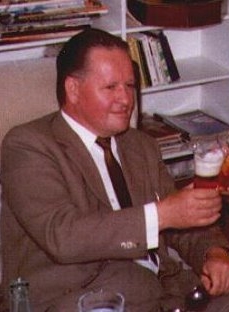
Working for Port Manager Noel A. Johnston MBE (photo above) at Townsend Car Ferries in those early days was an absolute pleasure. The office people busy in the small cottage near the old lock in Zeebrugge formed a tight-knit family, all trying to get the ships loaded and out on time through the very narrow Visart sluice gate. That was especially important since one of the captains was said to consider just two speeds when negociating the lock: “dead slow and stop”.
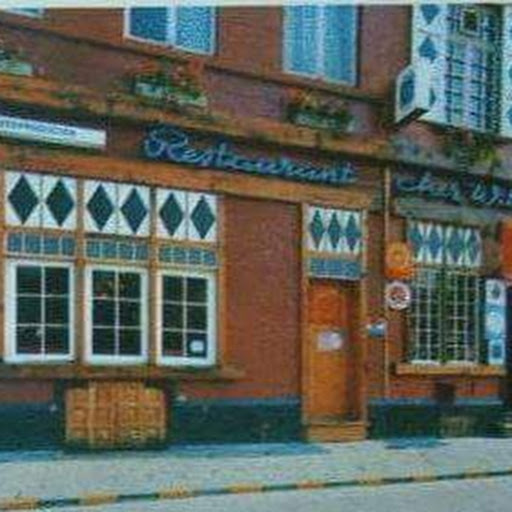
Only weeks after I began my employment the highlight became the first Christmas office party. It was held at the renowned “Chez Willy” restaurant with succulent “râble de lièvre” (saddle of hare) on the festive menu. In fact it was also my first time in a chic restaurant. Little did I know that this classy eating house would some time afterwards become one of my regular stomping grounds entertaining visiting company dignitaries, nor that a year or so later, in early 1971, “Chez Willy” would turn into a favourite dining place for Messrs Meister and Bollier of Radio North Sea International.


Saturday, 10 February 2018

10. THE LONGEST ‘GOLS’ IN HISTORY

In the early 60’s, before Radio Caroline came on the scene, I used to travel the world every night in bed, an earphone plugged in and the small transistor balanced on my chest. I could hardly wait for dusk to reach South-America. As soon as the path between my home and the America’s was in total darkness the most exotic signals would be wheedling their way to my bedroom. Wintertime was the best since the sun set early and conditions were soon right for the sky wave to work its magic, especially in the 60 m band. And thumbing below the sheets my right hand had been well trained to find even the weakest local stations in Venezuela and adjacent countries. I even taught myself some Spanish for the purpose. Although I must say that Assimil’s ‘Español sin esfuerzo’ at times was still too much ‘esfuerzo’ for my liking. In spite of my learning French –a related language- at school, there was still quite a bit of effort involved before I started to understand a modicum of Spanish. A big help however was the fact that in Latin America the language is properly pronounced and clearly enunciated. In Spain on the other hand people sound permanently ravenous as they gobble up at least half of every word they speak.

Although I have never been much of a sports person –apart from basketball and squash- at times I even tuned in to football matches on the small Latin stations. That’s where I for the first time heard a goal being scored, a Latin goal that is. The ‘gooooool’ shout by the commentator on ‘Ecos del Torbes’ went on forever. Well, at least for well over a minute. By comparison goals scored in my neck of the woods are most modest affairs. Many internet blogs claim that the extended gol-screams were introduced in the 80’s by Hispanic television commentator Andrés Cantor in the States. This obviously is a total fabrication as the practice was already in full swing on Latin radio 20 years earlier. That fact has recently been confirmed by Cantor himself, who admitted: “Yo no inventé nada. La manera de gritar el gol está inventada hace mucho tiempo”.

The Venezuelan station ‘Ecos del Torbes’ was big on sports. It broadcast from San Cristóbal and had been on the air since 1947. Many years later, as luck would have it, when preparing offshore Radio Paradijs, I was to meet its founder Don Gregorio Gonzalez Lovera in the States.


Night time listening in bed offered me many years of atmospheric entertainment. Amongst my favourites were the Windward Islands Broadcasting Service from Dominica, Radio Rumbos in Venezuela and Radio Reloj from Costa Rica. In later years, being able to tune in to Radio Reloj even came in handy one eventful night on board the Mebo 2, as I will recount later.

More of AJ's radio- and other anecdotes.

Friday, 9 February 2018

06. STARTING WITH STARTZ ON SHORTWAVE


One of the first broad­casters I was captivated by, when initially roaming the short­wave, was “Happy Sta­­tion”. That was the special Sunday morning program­me broad­cast world­wide by Radio Netherlands. Little did I know that many years later  I would be in more or less the same time slot when presenting “North Sea Goes DX” on RNI. “Happy Station” was in fact the oldest running radio pro­gramme in existence. It was presented by the multi-lingual Eddy Startz (1899-1976), who had started his transmissions for the Dutch company Philips in Eindhoven in 1928. As a young boy in 1960 I was very much taken with Startz’s happy chatter and the mixture of Dutch street organ music and marches by John Philip Souza. Although Souza wrote over a hundred marches, the one that sticks out in my memory is “Stars and Stripes Forever”. On the rare occasions that he was stormbound and at home, my father was also very fond of the programme. In the kitchen, only yards away, my mother was oblivious to it. She seemed to prefer cooking Sunday dinner to any form of entertainment that did not include the then German heartthrob Freddy Quinn. Who were we to complain, when we were about to be treated to succulent chicken in a thick brown sauce! It has to be said, all my mother’s dishes were deliciously Delia, avant la lettre.

More of AJ's radio- and other anecdotes.

Thursday, 8 February 2018

03. THE THEATRE OF THE MIND

It soon proved that my mother’s wireless set survived unscathed my many manipulations. Hence, the rules were further relaxed. This meant that I was now allowed ‘on the Medium Wave’. The increasingly appealing LW and KW, which stood for Long Wave and Short Wave, remained off-limits however. No reason was given, but I think my mother feared that engaging too many of the push buttons on the wireless box might upset some delicate balance in the innards of the set.

On the new stomping grounds my attention was soon drawn by the children’s programmes in Dutch broadcast from Hilversum in The Netherlands. To me they were slightly more appealing than any of the Flemish programmes on our own Belgian NIR, which stood for quite a mouth filling ‘Nationaal Instituut voor de Radio-omroep’.

As I grew a bit older I became captivated by so-called ‘Hoorspelen’. In English they were known as radio plays. Through them the wireless became my very own Tardis. The actors -with only their voices- magically transported me to another place, a different time and new sensations. With no visual component these audio dramas depended on dialogue, music and sound effects to help the listener imagine the story. As a result they were often referred to as “the theatre of the mind”. Radio drama became very popular before television ruined everything. That’s why even today I often only listen to Eastenders whilst doing some work on the computer. I like to think that my imagined version of the goings-on in Albert Square somehow has the edge. 

Looking back, the effectiveness of radio drama was probably best born out by a Halloween radio special broadcast by CBS in the States. In 1938 Orson Welles proved so good at communicating with his listeners and creating the theatre of the mind, that he drove a nation into panic (if the papers of the day are to be believed, that is). In the radio adaptation of ‘War of the Worlds’, he presented H.G. Wells’ novel as a simulated news broadcast. People believed it and ran into the streets with wet towels as make­shift gas masks to protect against the poison gas the radio said was headed to­wards them. Many had no doubt that civili­zation was laid to ruin by invading Martians and were convinced it was the end of the world. One particular farmer who, when hearing about the menacing Martian war machines with their tenticular arms and stilt-like metallic legs, is said to have gone out into his field armed to the teeth, ready to do battle with the alien monsters. In the darkness the poor man mistook his neighbour’s water tower for one of the gigantic Martian invaders, blowing several large holes in it with his shotgun.

In the seventies we had a copy of the broadcast as performed by the Mercury Theatre in our music library on board Radio North Sea. In fact on September 17, 1973, ‘Daffy’ Don Allen put the ‘War of the Worlds’ double LP on the air in it’s entirety on RNI. The album, lasting for over an hour, had just been released in Europe. While it was playing, the dj’s on the Mebo apparently sat listening in the darkened studio. Graham Gill was reported to have chewed off all of his fingernails during the performance. Unfortunately I wasn't on board at the time. In connection with the ‘War of the Worlds’ many people have remarked that when they approach the towers of Red Sands Fort -the former Maunsell Sea Fort home of Radio 390 in the Thames Estuary- they are immediately reminded of these woeful Wellsian war machines.

More of AJ's radio- and other anecdotes.